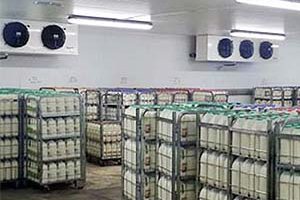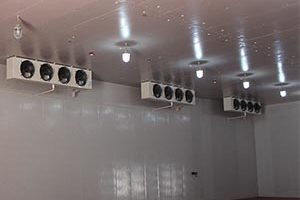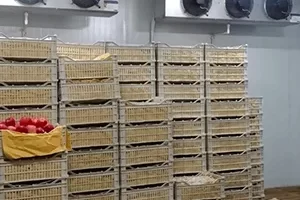



Nut & Dried Fruit Cold Storage
A nut or dried-fruit cold room is an enclosure with precise control of temperature, humidity, and gentle ventilation, designed for storing products such as pistachios, almonds, walnuts, and more. The purpose of this cold storage is to prevent fat oxidation and mold growth. Typically, these systems operate within a temperature range of 0 to 10 °C and a relative humidity of 55% to 70% . At Atlas Refrigeration Co., nut cold stores are engineered to international standards to preserve the products’ natural quality and flavor while extending shelf life and export value. Below, you’ll find the technical design details, key advantages, and the factors that influence pricing and the selection of a nut cold store.
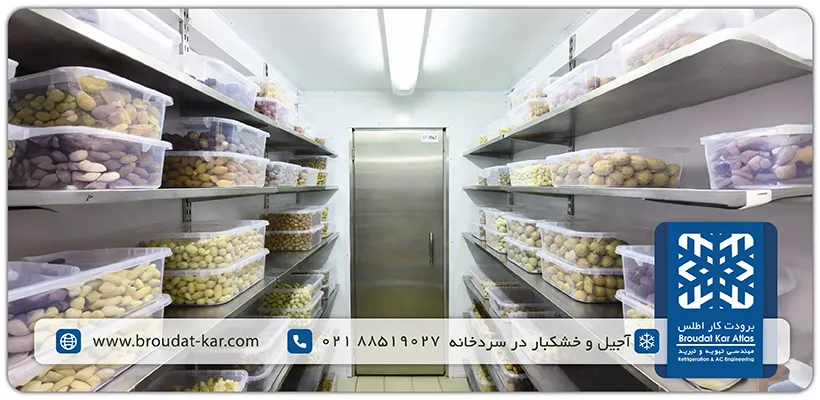
What Are the Benefits of Nut & Dried Fruit Cold Storage?
According to the International Nut & Dried Fruit Council (INC), the nut and dried-fruit market has surpassed 47 billion USD in recent years. While this figure is highly attractive to producers, what gets less attention is that 20% to 30% of nuts and dried fruits are lost to spoilage and mold due to improper temperature and humidity during storage. This is precisely where nut and dried-fruit cold rooms become critical.
Many producers and exporters consider cooling to be one of the main advantages of a nut cold store. However, the primary purpose is to keep fresh nuts at the right temperature and to control the humidity for dried fruits—preventing fat oxidation, inhibiting mold growth, and preserving export value. When these conditions are properly maintained, the result is lower waste, consistent flavor and aroma, and longer shelf life.
Reasons for the Importance of Cold Storage for Nuts and Dried Fruits
- Preserves freshness and sensory profile: Storing nuts and dried fruits in a purpose-built cold room keeps aromatic compounds and healthy oils in the kernels stable—i.e., truly keeping nuts fresh.
- Prevents mold and aflatoxin: A cool, controlled environment limits problematic fungal activity; humidity control for dried fruits, alongside gentle ventilation, reduces the risk of contamination.
- Stabilizes weight and appearance: Targeted humidity prevents wrinkling in raisins, figs, and dates, and maintains uniform color.
- Extends shelf life and export value: When products are kept to standard in a nut & dried-fruit cold store, their useful life increases.
- Improves return on investment: Higher quality drives higher sales and faster payback.
According to a study at the Agricultural University of Athens “Dried kernels produced after short term cold storage
of fresh nuts (10–20 days) showed, on average, a 35%–40% increase in total phenolic (TP) levels compared with conventionally dried kernels without the initial cold step.”
Optimal Temperature and Humidity for Storing Nuts and Dried Fruits
In designing any nut and dried-fruit cold store, two factors determine the final product quality more than anything else: the storage temperature for nuts and the appropriate humidity for dried fruits. These two small variables have the greatest impact on flavor, aroma, color, and even the product’s export value.
In the table below—based on standards from the U.S. Department of Agriculture (USDA)—we’ve listed the best temperature and humidity conditions for storing various nuts and dried fruits:
| Relative Humidity (%) | Temperature (°C) | Product |
| 65-75 | 0-10 | Pistachio |
| 65-75 | 0-10 | Almond |
| 65-75 | 0-10 | Walnut |
| 60-70 | 0-10 | Hazelnut |
| 70-75 | 0-5 | Date |
| 55-65 | 0-4 | Barberry |
| 55-70 | 0-5 | Mixed nuts |
Types of Nuts and Dried-Fruit Cold Storage by Product and Structure
In designing storage systems for nuts and dried fruits, correctly identifying the “cold-room type” is a key technical step. Below we review the main types along with their important features.
Classification by Product
If we categorize by product, nut and dried-fruit cold rooms fall into the following groups:
- Cold storage for nuts: For oil-rich kernels such as pistachios, almonds, walnuts, hazelnuts, seeds, peanuts, and cashews, an above-zero nut cold room is recommended—i.e., a temperature range that is cold but not below freezing (about 0 to 5 °C) so the natural fats are not damaged.
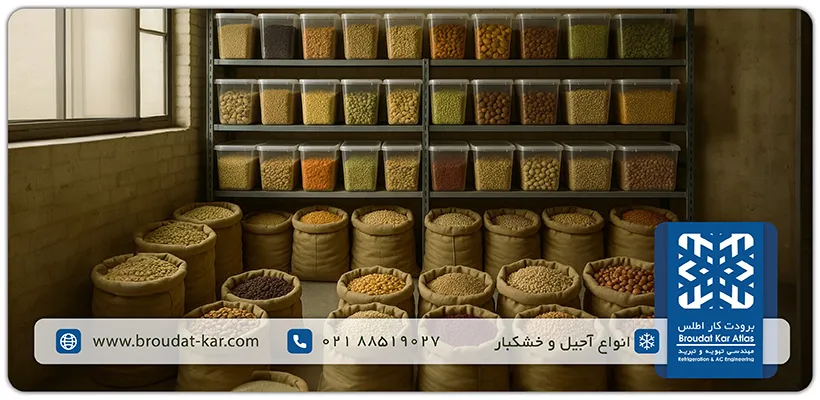
- Cold storage for dried fruits: For raisins, currants, dates, dried figs, barberries, and saffron, humidity control and gentle ventilation are the primary concerns; appropriate humidity is typically more critical. Research has shown that storing dried fruits at much lower temperatures (e.g., +1 °C) can increase antioxidant compounds.
Classification by Physical Structure
Cold rooms may differ in insulation, steady airflow, precise temperature and humidity control, and size/capacity suited to the product. In general, nut and dried-fruit cold rooms can be grouped as follows:
- Fixed cold room: Permanent installation with high capacity, full insulation, and precise temperature and humidity control. Suitable for factories and central warehouses, offering high energy efficiency and thermal stability.
- Portable or modular cold room: A modular, relocatable structure with quick installation and lower initial investment. Suitable for temporary projects and distribution centers, enabling easy expansion and relocation.
Technical Features and Specifications of Nut & Dried-Fruit Cold Storage
When it comes to storing nuts and dried fruits, no detail in the technical design is trivial. Even minor errors in insulation or ventilation can lead to quality loss, mold growth, or even the loss of the product’s export value. Therefore, a precise understanding of the technical specifications of a nut cold room is essential for proper design and execution.
Temperature and Humidity Range
Dedicated nut and dried-fruit cold rooms must maintain temperature within 0 to 10 °C with a maximum fluctuation of ±0.5 °C. This range offers the best balance between suppressing microbial activity and preserving the nuts’ natural fats.
Relative humidity (RH) is typically set around 55% up to a maximum of 70% to prevent excessive drying or moisture uptake. Digital sensors connected to a data logger are essential for real-time recording and control of both parameters.Insulation and Enclosure Materials
In dried-fruit cold rooms, polyurethane (PU) panels with a minimum thickness of 10 cm are used. This material has a very low thermal conductivity (about 0.024 W/m·K), minimizing energy loss.
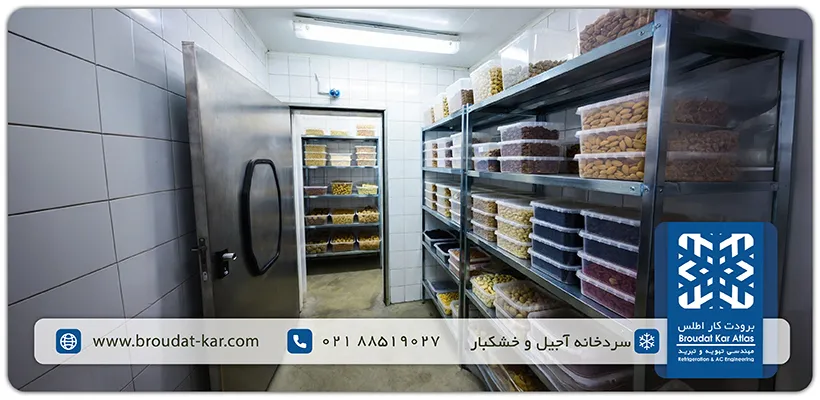
The floor, walls, and ceiling must be fully washable, mold-resistant, and moisture-resistant. Interior cladding is commonly made of galvanized sheet or polished stainless steel to prevent dirt and mold from adhering to surfaces.
Airflow System
One of the most important technical aspects is uniform temperature distribution. If airflow is not properly designed, warmer zones can form in corners or behind pallets, creating favorable conditions for mold.
To avoid this, engineers use energy-efficient axial fans and supply ducts with balanced airflow rates. In some models, the ventilation system is combined with a CO₂ sensor to prevent the buildup of gases released by product respiration.Ventilation, Filtration, and Odor Control
Dried fruits such as raisins, barberries, and dates readily absorb odors in enclosed spaces; therefore, an exhaust fan and an activated-carbon filter in the ventilation path help prevent stale smells and odor transfer.
Additionally, the exhaust design should maintain a slightly positive internal pressure so that contaminated outside air does not enter.
Step-by-Step Design Process for a Dried-Fruit Cold Room
In designing and building nut and dried-fruit cold storage, the main goal is to create a stable environment in which the product not only stays cool but also preserves its natural compounds, color, and aroma for months. Sound engineering and design mean harmonizing heat transfer, humidity control, ventilation, and food hygiene.
Step 1: Capacity and Heat-Load Calculation
The first step is to calculate the cold room’s capacity. Based on product weight (kg or tons), storage duration (days/months), product condition at entry (fresh or dried), and the number of pallets, the designer must estimate the total heat load.
Step 2: Selecting the Refrigerant
Smaller cold rooms typically use fluorinated (HFC) refrigerants such as R22, R-134a, or R-404A, which offer high efficiency and finer control. For larger industrial projects, ammonia (NH₃) remains the best option because it is environmentally compatible and has a high coefficient of performance (COP).
Research has shown that ammonia refrigeration systems are highly energy-efficient and in many cases outperform systems using synthetic (fluorinated) refrigerants.
Step 3: Temperature and Humidity Control System Design
A dried-fruit cold room should include two independent control loops:
- Temperature control (with PT100 sensors and a digital thermostat)
- Humidity control (with a humidistat plus an industrial dehumidifier or a water-steam humidifier)
The objective is to keep internal temperature and relative humidity within standard ranges.
Step 4: Equipment Layout and Airflow
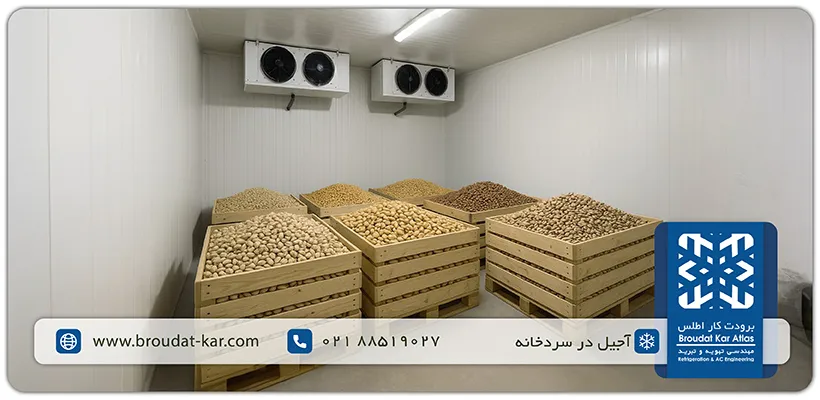
Inside a nut cold room, the placement of the condenser, evaporator, fans, and return-air path must be arranged so that airflow passes gently through the racks and reaches all areas.
Step 5: Custom Design and Implementation Experience
Major engineering firms—such as Atlas Co., with over three decades of experience in designing and executing ammonia and HFC cold rooms—typically use a modular design for nut and dried-fruit projects so each section of the facility can have separate temperature and humidity control tailored to the product (e.g., pistachio kernels or dates).This type of customized design not only reduces energy consumption but also maximizes quality retention—especially for dried-fruit exporters, for whom consistent quality is synonymous with preserving export markets.
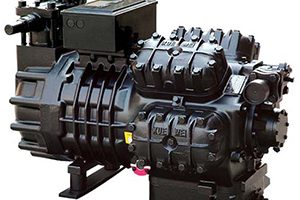
Another standout feature of Atlas Co. is the use of advanced equipment from renowned brands, including various ammonia and HFC screw compressors from manufacturers such as Bitzer, Copeland, and others.
Execution Stages for a Nut & Dried-Fruit Cold Room (Installation, Testing, Commissioning)
In industrial projects involving sensitive foods, a cold room’s success depends not only on sound design but also on precise execution and step-by-step testing, which ultimately determines final quality. At Atlas Refrigeration Co., the installation process for a nut cold room includes structural assembly, refrigeration system implementation, control wiring, and meticulous insulation—performed under the supervision of a refrigeration commissioning engineer.
1) Installing the Structure and Insulation
In the first stage, 10-cm polyurethane (PU) panels are installed according to the layout drawings. All joints between panels must be fully sealed to prevent air and water-vapor ingress, since even minor moisture intrusion can cause frost formation, higher energy consumption, and reduced refrigeration efficiency.
2) Installing the Refrigeration Equipment
After the structure is in place, the main equipment—compressor, condenser, evaporator, and refrigerant piping—is installed. For large nut cold rooms, an ammonia screw compressor is recommended because, compared with HFC systems, it provides greater stability at part load and reduces temperature fluctuations.
For smaller projects (retail or containerized units), HFC compressor systems using refrigerants such as R404A or R407C are common due to easier installation and lower cost.
3) Testing the Dried-Fruit Cold Room
Next comes the testing phase, which includes several key checks:
- Refrigerant leak test: Using dry nitrogen under pressure (about 250 psi)
- Compressor and expansion valve performance test
- Temperature fluctuation test: With fans running and a simulated load, to ensure the room air temperature remains stable within 0 to 5 °C
- Calibration of temperature and humidity sensors using a data logger
4) Commissioning the Cold Room
After the tests are approved, commissioning begins. This includes step-by-step cooling, gradually bringing the room temperature down from ambient (25 °C) to the target (e.g., 4 °C).
A sudden temperature drop can cause surface condensation on walls or products, which is particularly risky for dried fruits.
5) Data Recording and Operator Training
Finally, the operating team must be trained on temperature and humidity setpoints, alarm management, data recording, and periodic equipment servicing. Experience shows that proper operator training plays a crucial role in extending equipment life and maintaining product quality.
Periodic Service for Nut & Dried-Fruit Cold Rooms
Performing regular preventive maintenance—including checking compressor pressure and oil level, cleaning coils, and testing for refrigerant leaks—improves energy efficiency and helps prevent sudden swings in temperature and humidity. Installing a data logger for real-time temperature and humidity recording is not only essential for quality control but is also required for obtaining export permits. Careful monitoring of these records helps keep nut and dried-fruit quality within standard ranges.
Reputable manufacturers such as Atlas Co. not only design and install systems, but also back long-term performance with a one-year cold-room warranty and after-sales service for up to 15 years. These services include seasonal inspections, leak remediation, sensor calibration, and operator training to ensure the cold room always runs at optimum conditions. In practice, a well-executed maintenance plan and consistent warranty support safeguard product quality, shelf life, and economic value across the supply chain.
How Much Does a Nut & Dried-Fruit Cold Room Cost?
The cost of a nut and dried-fruit cold room depends on factors such as storage capacity, refrigerant type, insulation materials, control equipment, and installation location.
On average, a dried-fruit cold room with 5-ton and 500-ton capacities—depending on the design and equipment brands—typically costs about USD 5,000 and about USD 70,000, respectively. These figures are indicative only; an individual project may price higher or lower due to design approach and system type, insulation thickness, refrigeration equipment brand, and stability/control systems. In all cases, an accurate estimate is only possible after collecting the initial technical data and performing a heat-load calculation.

Purchasing a Nut & Dried-Fruit Cold Room
Before buying a nut cold room, you should evaluate the product type, capacity, inventory turnover, and the local climate at the installation site. A cold room designed for pistachios is not necessarily suitable for dates or raisins, since these products require different humidity levels. When requesting quotes, pay close attention to the compressor brand, refrigerant type, and after-sales support.
Atlas Co., offers customized designs and precise heat-load calculations, enabling you to order a cold room tailored to your business needs. You can fill out the consultation form to receive a detailed pro forma quotation and benefit from free technical advice from our engineering team.
For pricing inquiries and a free consultation, contact our specialists today.
Conclusion
In the highly competitive nuts and dried-fruits market, building a nut cold room is not just a technical investment—it’s a tool for protecting brand value and ensuring export quality. Designing a dried-fruit cold store with careful attention to temperature, humidity, ventilation, and refrigerant selection helps producers deliver products that are fresh, safe, and compliant with international standards.