


Apple Cold Storage
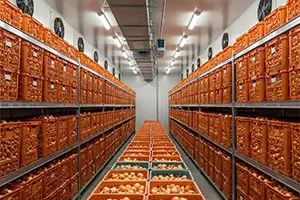
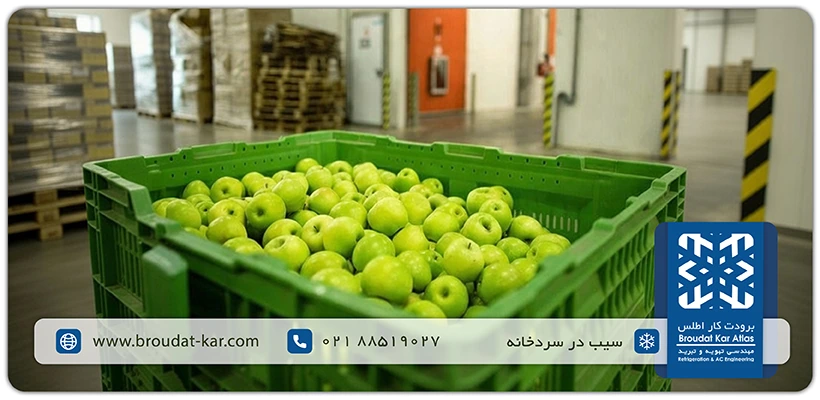
Apple cold storage is one of the most effective methods for properly storing apples after harvest. By precisely controlling temperature, humidity, and when necessary, atmospheric composition, it prevents quality loss, shriveling, mold growth, and weight reduction. Apples are stored in above-zero temperature ranges (typically 0 to 4°C) with controlled relative humidity to slow down respiration and ripening, allowing for extended storage and off-season market supply.
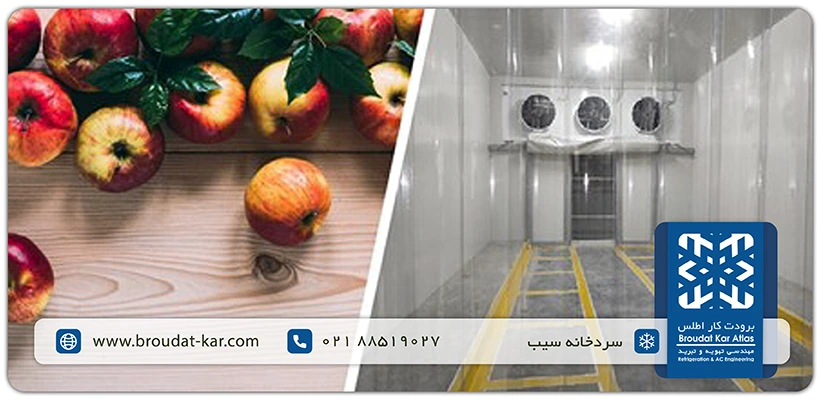
Atlas Refrigeration Co. designs and constructs apple cold storage facilities fully customized to the apple variety, required capacity, and operational conditions. For detailed information, a transparent quotation, and free consultation, simply contact our experts.
Who Benefits Most from Apple Cold Storage?
Apple growers and producers
If you have a high harvest volume and plan to sell during peak market prices, apple cold storage allows you to maintain product quality and avoid forced sales during harvest season.
Cold storage operators and agricultural investors
Apple cold storage is considered a low-risk and profitable investment, as apples are among the most consumed fruits in both domestic and export markets, with demand for storage throughout most of the year.
Sorting, packaging, and export units
For facilities involved in sorting, packaging, or exporting apples, precise control of temperature and humidity is critical, as appearance, weight, and fruit health directly affect final pricing.
Apple processing industries
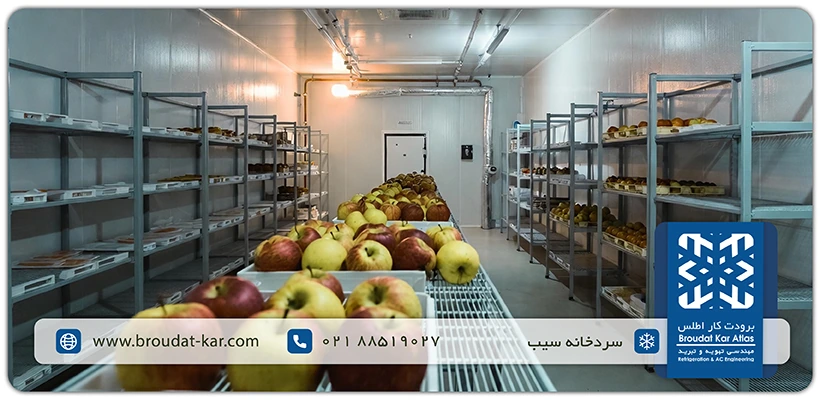
Juice, concentrate, compote, and other apple-processing factories rely on apple cold storage to ensure stable raw material supply and consistent product quality.
Technical Conditions and Standard Temperature for Apple Cold Storage
To preserve appearance, texture, flavor, and weight during storage, apple cold storage must be designed based on precise and controllable technical parameters. The most important factors include temperature, relative humidity, and air circulation:
- Storage temperature: Apple cold storage is designed as an above-zero facility, typically operating between 0 and 4°C. This range slows respiration while preventing freezing damage.
- Relative humidity: The ideal humidity level is between 90% and 95%. Lower humidity causes moisture loss, shriveling, and weight reduction, while humidity above 95% may promote mold growth.
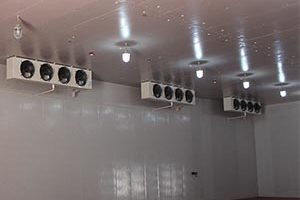
- Air circulation: Uniform airflow ensures consistent temperature and humidity throughout the storage area and prevents accumulation of respiration gases.
Apple Cold Storage Specifications Table
The specifications of apple cold storage are summarized in the table below:
| Above-zero (0 to 4°C) | Type of cold storage |
| 0to4°C (adjustable based on apple variety) | Standard temperature range |
| 90%to95% | Suitable relative humidity |
| Uniform distribution to prevent gas accumulation | Air circulation |
| Conventional, industrial, containerized (mobile), controlled atmosphere (CA) | Available types |
| Growers, investors, sorting/export units, processing industries | Main applications |
Types of Apple Cold Storage
Conventional Apple Cold Storage (Above Zero)
The most common option, controlling only temperature and humidity. Suitable for short- to medium-term storage and gradual market supply. More economical in cost.
Industrial Apple Cold Storage
Designed for high capacities and commercial operation. Ideal for large-scale growers, cold storage operators, and distribution centers.
Containerized (Mobile) Apple Cold Storage
Prefabricated and portable units suitable for small projects, orchards without permanent infrastructure, or temporary use. Lower capacity but faster installation.
Controlled Atmosphere (CA) Apple Cold Storage
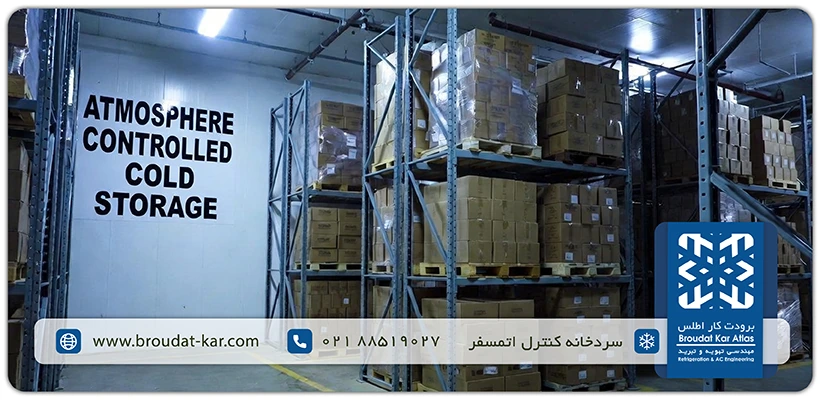
In addition to temperature and humidity, oxygen and carbon dioxide levels are controlled. This significantly slows respiration and extends storage duration by several months compared to conventional systems. Ideal for long-term storage and maximum quality preservation.
Apple Cold Storage Price and Cost Factors
The cost of constructing an apple cold storage facility depends on several technical and operational parameters and cannot be determined as a fixed figure without project evaluation. Pricing is calculated based on storage capacity (tonnage), type of system (conventional or controlled atmosphere), insulation materials, refrigeration equipment specifications, automation level, and installation location.
In addition, climate conditions, electricity infrastructure, type of compressors and condensers, and optional features such as pre-cooling rooms or atmosphere control systems significantly influence the final investment cost.
Therefore, accurate pricing requires a technical assessment and cooling load calculation to ensure both cost optimization and long-term operational efficiency.
Stages of Apple Cold Storage Design and Construction
1- Needs assessment: Determining capacity, storage duration, operational purpose, and site conditions.
2- Cooling load calculation and equipment selection: Based on storage volume, product entry temperature, and climate.
3- Technical design and layout planning: Including airflow path, equipment placement, electrical systems, and optional pre-cooling room (reducing apple temperature to about 10°C before storage).
4- Insulation and structural preparation: Using sandwich panels and proper insulation to prevent energy loss.
5- Installation and control system setup: Refrigeration equipment and environmental control systems are installed and calibrated.
6- Testing and commissioning: Final performance testing of temperature, humidity, airflow, and system stability before handover.
Why Choose Atlas Refrigeration Co.?
Apple cold storage systems designed by Atlas Co. are engineered to maximize quality preservation and operator profitability. Each project is customized according to apple variety, storage duration, climate, and operational goals.
Accurate cooling load calculations and proper equipment selection ensure uniform temperature and humidity while minimizing energy consumption and extending equipment lifespan. Standard insulation and stable control systems—along with optional CA technology—allow long-term storage with minimal weight and quality loss.
The company provides a one-year warranty, operational training, and technical support to ensure reliable long-term performance.
Conclusion
Apple cold storage is a critical infrastructure investment for maintaining quality, reducing waste, and increasing profitability in the apple supply chain. Controlled temperature and humidity prevent weight loss, shriveling, mold growth, and market value reduction while enabling strategic timing of product sales.
Choosing a properly engineered and customized cold storage system significantly impacts product longevity and return on investment. Therefore, apple cold storage should be viewed as a long-term investment rather than merely a construction cost.