


Dual-circuit and dual-purpose cold rooms
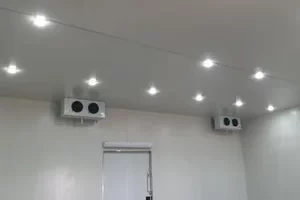
A dual-circuit cold room, or two-circuit refrigerator, is a type of commercial cold room in which a single space is partitioned into two sections: one below-zero and one above-zero. In this configuration, the below-zero section has an active cooling unit, while the above-zero section is cooled by circulating air from the sub-zero compartment. This model typically operates with a single compressor and is a cost-effective solution for restaurants and small retail outlets.
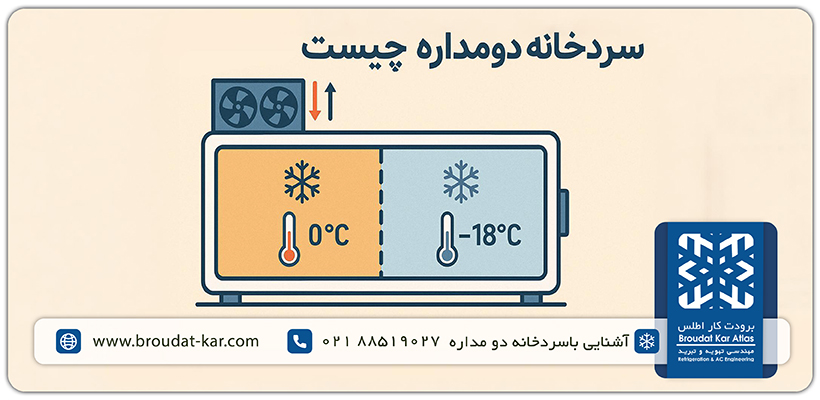
By contrast, in larger projects, dual-purpose cold rooms are used. In these systems, the storage halls are connected to a central refrigeration plant, and by changing the refrigerant circuit, each hall can be operated either in below-zero mode for protein products or in above-zero mode for fruit and vegetables.
According to recent research, as demand grows for flexibility in food and pharmaceutical warehousing, the use of dual-circuit cold rooms is increasing worldwide (source). Atlas refrigeration, backed by more than three decades of experience in the design and implementation of refrigeration systems, is a pioneer in the design of dual-circuit industrial cold rooms in line with international standards and, by offering cost-effective solutions, provides the possibility of building and implementing dual-circuit cold room projects at the highest quality level.
What is a dual-circuit or dual-purpose cold room and how does it work?
A dual-circuit cold room, sometimes referred to as a dual-purpose cold room, is a system that allows chilled storage in two different operating modes. In industrial dual-purpose cold rooms, you can switch the system from above-zero mode (refrigerated mode for storing fruit and vegetables) to below-zero mode (freezer mode for storing protein products) simply by adjusting the controller.
As a result, instead of building two separate cold rooms, a single system can cover a wide range of storage needs for food or agricultural products. This flexibility in temperature control is what makes dual-circuit cold rooms an intelligent choice for facilities with limited space and variable storage volumes.
The way a dual-circuit cold room works is rooted in its refrigeration system. In these designs, two separate or semi-independent refrigeration circuits are installed, each capable of controlling temperature in a different range. One circuit is usually dedicated to above-zero operation, and the other to below-zero operation. Switching between these two modes is managed via a central digital controller and solenoid valves that regulate refrigerant flow.
In this system, compressors, evaporators and condensers operate in full coordination so that energy efficiency is maintained in every mode. As a result, the system can switch from refrigerator to freezer and back again without long shutdowns or the need for extensive manual intervention.
Six unique features of dual-circuit industrial cold rooms
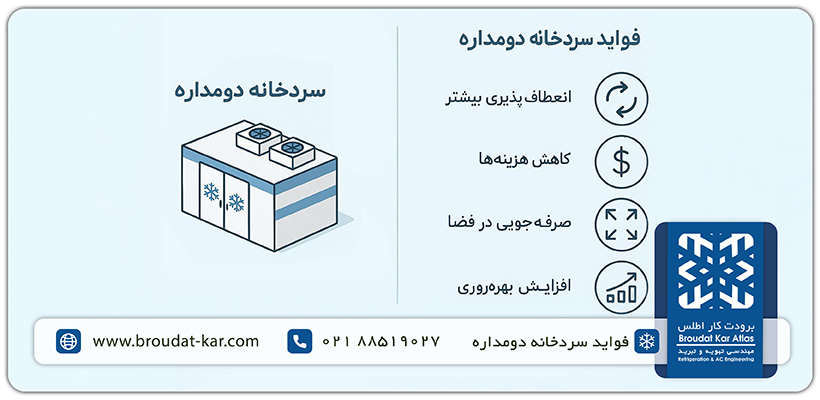
Compared to conventional cold rooms, a dual-circuit industrial cold room is more flexible, smarter and more economical. Below we review the most important features of this type of system.
1- Operational flexibility
The main advantage of dual-circuit cold rooms is their flexibility in operation. By changing the settings, you can switch from above-zero mode for storing fresh products to below-zero mode for storing frozen food products.
2- Savings in space and cost
In the design of a dual-circuit industrial cold room, two operating modes are combined in a single room. This means there is no need to build two separate cold rooms. As a result, construction, utilities and maintenance costs are reduced and the physical space is used more efficiently.
3- Adaptive refrigeration system
These systems use compressors and smart controllers that can adapt to changes in heat load and temperature requirements. In some models, two-stage systems or parallel rack circuits are used so that heat transfer and performance across a wide temperature range are achieved with high efficiency.
4- Superior insulation
Because these cold rooms must operate in both above-zero and below-zero modes, the use of thick, high-density sandwich panels is essential. This level of insulation prevents temperature fluctuations and leads to energy savings. In modern designs, complete sealing of walls and joints is very important so that humidity and temperature can be controlled more stably.
5- Precise and automated controls
In the new generation of dual-circuit cold rooms, digital controllers with touch screens are installed to intelligently manage temperature, humidity and alarms. The system can switch between above-zero and below-zero modes with just a few clicks. These controllers also send automatic alerts in the event of faults or abnormal fluctuations, helping to prevent damage to stored products.
6- Multi-purpose applications
One of the reasons for the popularity of dual-circuit cold rooms is their high adaptability across different industries. From food and agriculture to pharmaceuticals and restaurants, many sectors use these systems to reduce costs and increase efficiency. In fact, any business that needs to store products at different temperature levels can get the most benefit from a dual-circuit cold room design.
Types of dual-purpose cold rooms
Dual-purpose cold rooms can be classified from two perspectives: one based on physical structure and the other based on refrigeration system design. In practice, the differences between these models lie in how they are built, their dimensions and their intended applications. Choosing the right type depends entirely on the project requirements, available space and the kinds of products that will be stored.
Types of dual-purpose cold rooms based on physical structure
In this classification, the main criteria are the structure and installation method of the cold room:
- Mobile/container cold storage:
pre-fabricated, portable cold rooms that can be installed in different locations. They are a very practical option for temporary or seasonal projects. - Chamber / walk-in cold rooms:
Fixed units, usually small to medium in size, built on site using insulated panels. This type often includes two compartments with different temperature ranges. - Warehouse cold storage:
Large industrial models with several separate sections operating at different temperatures, used for large-scale distribution chains and for the food and pharmaceutical industries.
Advantages and disadvantages of dual-circuit cold rooms
Like any other industrial system, dual-circuit cold rooms – despite all their capabilities and technical advances – have their own set of advantages and limitations that you need to understand before making a purchase decision.
Advantages:
- High temperature flexibility for switching between cold room (chilled) and freezer modes
- Lower construction and space costs compared to building two separate units
- Higher reliability in models with two fully independent circuits (if one circuit fails, the other can remain in operation)
- Energy savings in modern designs equipped with adaptive control systems
- Multi-purpose usability across various food and agricultural industries
- More precise temperature and humidity control using smart thermostats and data loggers
Disadvantages:
• Higher initial cost due to additional equipment and dual circuits
• Greater technical complexity during installation and repair
• Higher energy consumption when frequently switching between operating modes
• Need for skilled technical personnel for commissioning and periodic maintenance
Comparison table: dual-circuit vs single-circuit cold rooms
To choose between a dual-circuit cold room and a single-circuit cold room, you need to compare their operational, technical and economic differences. The table below summarizes the most important distinctions:
| Single-circuit cold room | Dual-circuit cold room | Feature |
| Only one temperature range (for example only above-zero or only below-zero) | Ability to switch between two different temperature ranges | Temperature range |
| Suitable for storing a single specific product (such as frozen meat or fresh fruit) | Suitable for businesses with a wide product mix or changing needs | Application |
| Simpler design with fewer components | Includes two refrigeration circuits and a more advanced control system | System complexity |
| Lower cost and easier to build and install | Higher initial cost but broader functionality | Construction and start-up cost |
| In case of failure, the entire system stops | In models with two independent circuits, one circuit can remain in operation if the other fails | Reliability (redundancy) |
| Single-product specialist warehouses (meat, fruit, dairy, etc.) | Restaurants, chain stores, multi-product processing plants | Target industries |
Did you know?
According to scientific research, energy consumption in a dual-circuit system is about 30% lower than in
a single-circuit system (source).
Equipment of dual-circuit cold rooms
Below we introduce the main and auxiliary components used in this type of system.
Evaporator
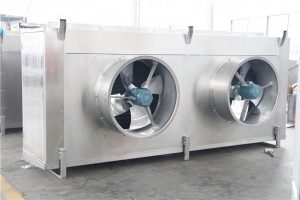
In dual-circuit cold rooms, evaporators are designed so they can operate effectively in both modes. Typically, above-zero stores use evaporators with a smaller fin spacing (around 10 mm), while below-zero applications use models with a larger fin spacing (around 12 mm). Because of this, when the operating mode of the cold room changes, there is no need to replace the evaporator; the same unit, sized with a higher capacity, can adequately serve both conditions.
Compressor
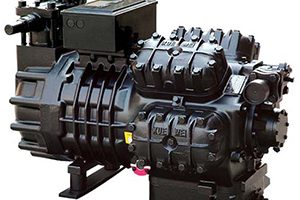
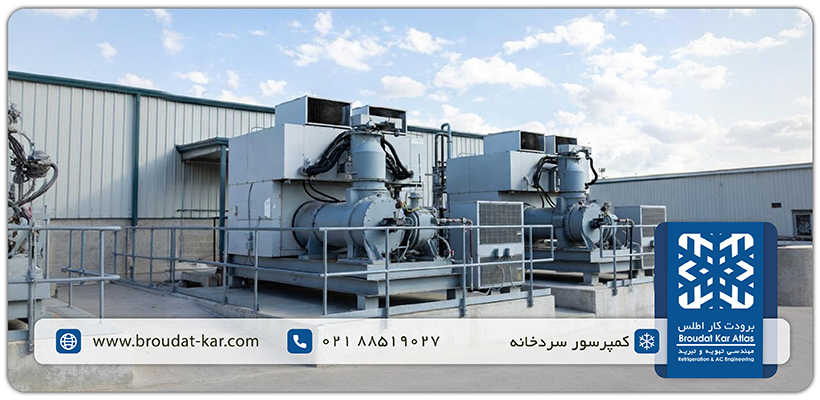
In the refrigeration cycle of a dual-circuit cold room, there are two different working pressure levels. Compressors are therefore divided into two main types:
1- High-pressure compressor for the above-zero circuit
2- Low-pressure compressor for the below-zero circuit
When the operating mode of the cold room is changed, high-pressure compressors can be brought in parallel into the low-pressure circuit so that the system continues working in the new mode without loss of performance. This design increases compressor service life and reduces overall system wear.
Condenser
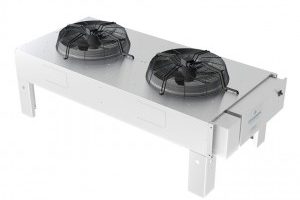
In this type of cold room, the condenser is selected based on the total system load, and switching between above-zero and below-zero operating modes does not affect its basic function.
Electrical panel and control system
The cold room electrical panel includes control components such as a digital thermostat, temperature sensors, a central controller and protective relays. In industrial dual-circuit cold rooms, these systems monitor temperature intelligently and allow automatic switching between the two operating modes.
Auxiliary and supporting equipment
Other equipment used in dual-circuit cold rooms includes:
• Pressure and temperature gauges to display real-time system status
• Control valves and safety switches (high/low pressure switches) to protect the compressors
• Refrigerant pumps and accumulators to regulate refrigerant flow in the circuit
• Suitable refrigerant (such as R404A or ammonia) capable of operating across two temperature levels
• Thermal insulation and sandwich panels to prevent energy loss
• Automatic defrost systems to remove ice from the evaporator
Services of Atlas refrigeration for dual-circuit cold rooms
Atlas refrigeration, with more than three decades of successful experience in the refrigeration industry, carries out all stages of construction and installation of industrial dual-circuit cold rooms using the latest technologies. Our goal is to provide precise, economical solutions that comply with international standards.
Why Atlas refrigeration?
- Free consultation
- Specialist training for the operation team
- Fully customized design of dual-circuit cold rooms tailored to the exact needs of the project
- Installation, commissioning and complete performance testing of the cold room to ensure stable storage conditions
- Valid one-year warranty along with 15 years of after-sales support
Price of dual-circuit cold rooms
The price of a dual-circuit cold room depends on several key factors, including refrigeration capacity and room dimensions, compressor type, panel quality and insulation thickness, as well as the control equipment and level of system automation.
Since these systems are fully custom-designed, it is recommended that you contact the experts at Atlas refrigeration to obtain a price quotation for a dual-circuit cold room and receive specialized consulting. By optimizing the design and selecting the right equipment, this company offers the best possible pricing on the market while maintaining quality and efficiency.
Final remarks
In the end, it can be said that storage space and energy consumption are becoming more important for factories and producers every day. In this context, dual-circuit cold rooms are one of the most cost-effective solutions. By combining two functions in a single space, these systems not only reduce costs and save space, but also offer remarkable flexibility in temperature control.
If you are looking for a cold room that can operate accurately and continuously in both chilled and frozen modes, we at Atlas refrigeration are ready to design this system exactly in line with your needs, available space and budget, while offering the best possible price.