


Cherry and Sour Cherry Cold Storage
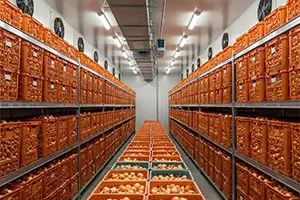
A cherry and sour cherry cold storage room prevents softening, discoloration, and rapid spoilage through precise control of temperature, humidity, and — when required — atmosphere. This allows growers and orchard owners to keep their produce in marketable condition for significantly longer periods. The standard storage temperature for sweet cherries ranges from -1°C to -0.5°C, while sour cherries are typically stored at around 0°C, both at a relative humidity of 90–95%.
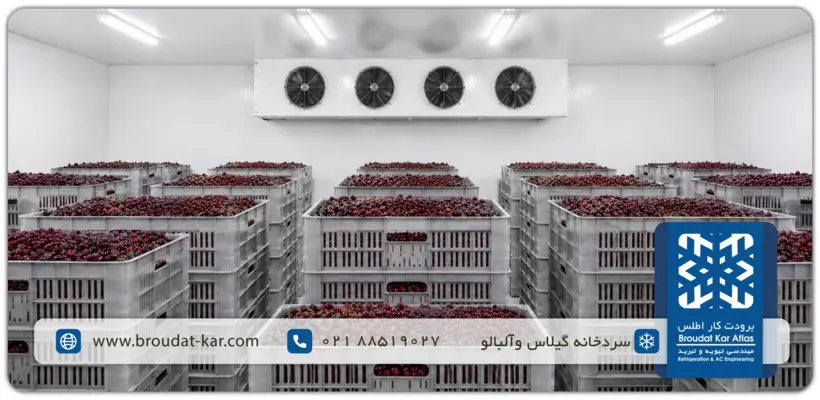
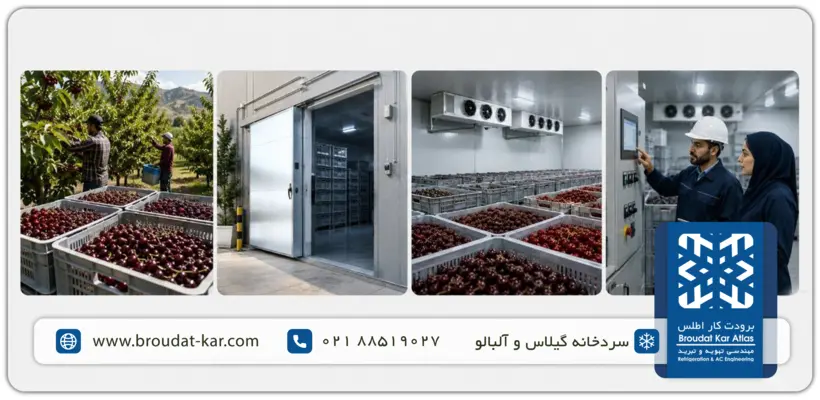
Atlas Refrigeration Co. currently designs and builds custom cherry and sour cherry cold storage rooms across the country, tailored to each project’s required capacity, storage duration, and intended use.
Why Do Cherries and Sour Cherries Require a Specialized Cold Room?
Cherries and sour cherries are among the most highly perishable, high-respiration-rate fruits. A high respiration rate means that if the fruit is not chilled immediately after harvest, the tissue softens rapidly and the produce loses its market quality. Unlike fruits such as apples, cherries cannot tolerate even a few degrees of temperature deviation.
Simultaneous control of temperature, humidity, and air circulation speed is the only way to prevent shriveling, browning, and weight loss in a cherry cold storage room. This is why the engineering design of these facilities must be more precise and operate under tighter conditions than most other cold rooms.
Who Needs a Cherry and Sour Cherry Cold Storage Room?
Any business handling highly perishable, short-shelf-life fruit that wants to reduce waste and extend its selling window can benefit from a cherry or sour cherry cold storage facility. These include:
- Cherry and sour cherry growers and producers: Given the short harvest window and rapid spoilage of these fruits, a cold room enables controlled storage and prevents forced selling at peak harvest time.
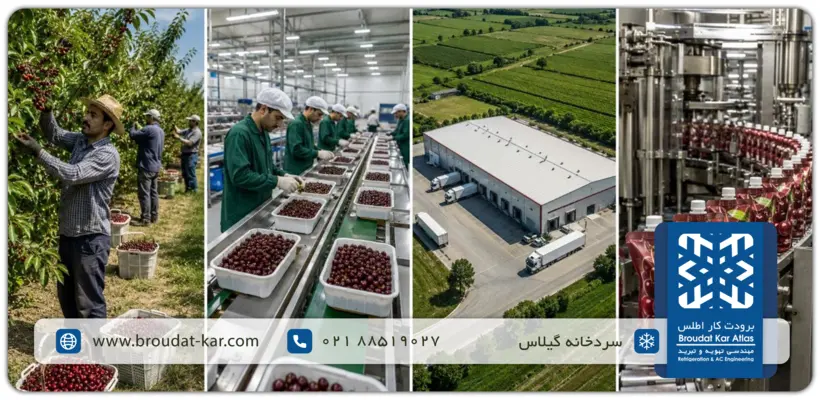
- Exporters and packing houses: Precise temperature and humidity control is critical for maintaining firmness, color, and visual quality until shipment — especially in export operations where even a few days’ delay can cause significant quality loss.
- Cold storage operators and agricultural investors: Due to high seasonal demand and the sensitivity of the product, a cherry and sour cherry cold room is a specialized option with solid returns in cherry-producing regions.
- Processing plants (juice, concentrate, freezing): Short-term cold storage before processing is essential to prevent fermentation and softening.
In short, any operation where the visual quality, weight, and marketability of cherries and sour cherries matter cannot rely on standard ambient storage. A specialized cold room for these products is a management tool for increasing profitability — not simply a refrigerated space.
Technical Specifications and Standard Storage Conditions for Cherries and Sour Cherries
To prevent softening, discoloration, and quality degradation, a cherry and sour cherry cold storage room must be designed around the following precise parameters:
| Sweet Cherry | Sour Cherry | Technical Parameter |
| ~0°C | -1°C to -0.5°C | Storage Temperature |
| 90–95% | 90–95% | Relative Humidity |
| 3–7 days | 2–3 weeks | Approximate Shelf Life |
| Limited use | O₂ ~2–3% / CO₂ ~5–6% | Controlled Atmosphere (if applied) |
| Required | Required | Pre-Cooling Before Storage |
Types of Cherry and Sour Cherry Cold Storage Rooms
Choosing the right type of cherry cold storage depends on the required storage duration, intended use (fresh market, export, or processing), and the capacity needed. Each type offers a different level of temperature control and technology, and must be selected according to the specific requirements of the project.
Above-Zero Cold Room for Cherries
Operating at approximately +1°C to +4°C, this type is used for short-term storage (up to 1–2 weeks). It is suitable for growers and exporters who need to bring their produce to market quickly while preserving appearance and firmness.
Sub-Zero Cold Room (Industrial Freezing)
In this system, temperature is reduced to approximately -18°C to -25°C, allowing fruit to be stored for several months. This method is primarily used by processing plants, frozen product manufacturers, and industrial exporters, and is not recommended for fresh market supply.
Controlled Atmosphere (CA) Cold Room
In addition to temperature and humidity control, oxygen levels are reduced and carbon dioxide is increased to slow the fruit’s respiration rate. This type is used to extend shelf life and preserve quality for export or specialist storage. It requires a higher initial investment.
Modular (Portable) Cold Room
Built as a prefabricated, transportable unit, this is a suitable option for orchards without permanent infrastructure. It has a more limited capacity but offers rapid installation and a lower upfront cost compared to industrial models.
Key Components of a Cherry and Sour Cherry Cold Storage Room
For stable, reliable performance, the following components are essential:
| Role in Performance | System Component |
| Provides stable, consistent cooling without fluctuation | Compressor matched to actual load |
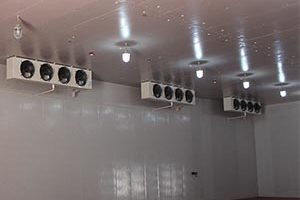
| Prevents hot or cold spots within the room | Evaporator with uniform air distribution |
| Reduces energy loss | Polyurethane sandwich panel insulation |
| Reduces energy loss | Digital temperature and humidity control system |
| Rapidly reduces product temperature after harvest | Pre-cooling system |
Design and Construction Process for a Cherry Cold Storage Room
Designing a cherry and sour cherry cold storage room demands precise refrigeration load calculations and proper execution, given the high sensitivity of these fruits. Each stage directly affects product shelf life, final quality, and energy consumption.
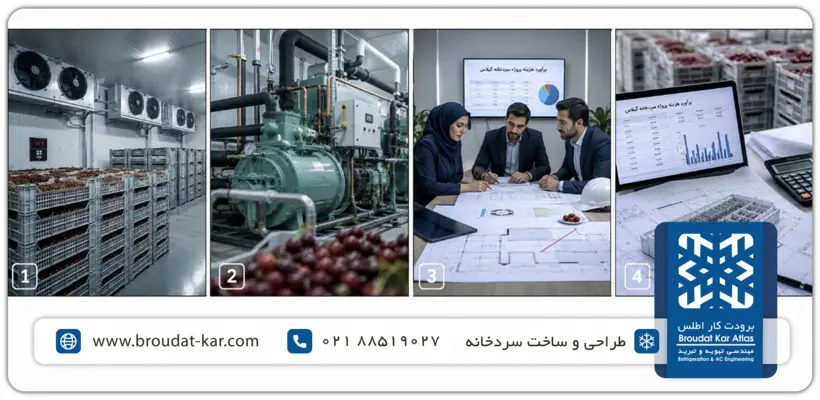
1. Needs Assessment and Project Objective Review
This stage covers the required capacity, storage duration (short-term or long-term), intended use (fresh market, export, or processing), and the climatic conditions of the site.
2. Refrigeration Load Calculation and Capacity Sizing
Based on the fruit tonnage, product temperature at intake after harvest, and ambient conditions, the refrigeration load is calculated and the true cooling system capacity is determined.
3. Selection of Refrigeration Equipment
The compressor, evaporator, condenser, and temperature control system are selected according to the required capacity and cold room type (standard or CA) to guarantee operational stability.

4. Structural Design and Insulation
Walls, ceiling, and floor are insulated with polyurethane sandwich panels to prevent energy loss and temperature fluctuations.
5. Installation of Temperature and Humidity Control Systems
Digital monitoring systems are installed to maintain temperature and humidity within the standard range (-1°C to 0°C and 90–95% RH) with minimal variation.
6. Testing, Commissioning, and Handover
After full installation, the system is checked for temperature stability, air circulation, and energy consumption before the cold room is handed over for operation.
Cherry Cold Storage Room Pricing
The cost of a cherry and sour cherry cold storage room is calculated on a project basis, depending on factors such as storage capacity, cold room type (above zero, sub-zero, or controlled atmosphere), refrigeration equipment quality, and site conditions. Due to the variation in requirements between projects, an accurate price can only be provided after a technical assessment and refrigeration load calculation.
At Atlas Refrigeration, once we receive information on capacity, intended use, and site location, we provide a technical proposal along with a transparent cost estimate, enabling the client to make a well-informed decision on equipment level and investment scope.
Atlas Refrigeration Co. — Decades of Experience in Cherry Cold Storage Design
Designing a cherry and sour cherry cold storage room requires engineering precision in refrigeration load calculation, equipment selection, and stable temperature and humidity control — due to the high perishability and sensitivity of these fruits. At Atlas Refrigeration, every project is designed on a custom basis according to actual capacity, intended use, and the climatic conditions of the region, ensuring product quality is maintained throughout the storage period.
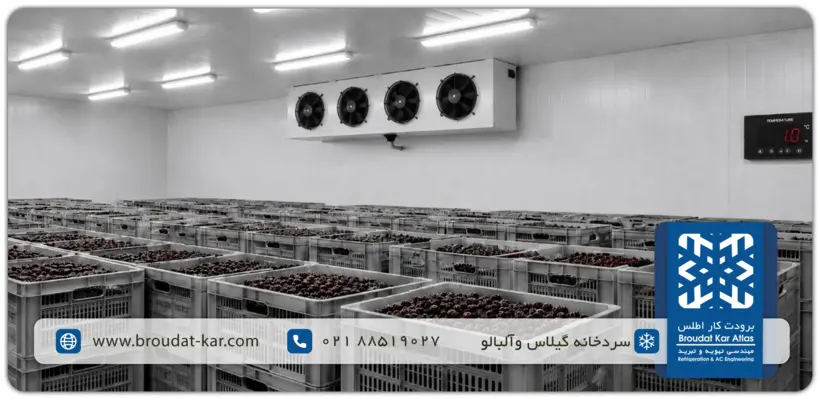
The use of standard refrigeration equipment, proper insulation, precise environmental control, a one-year warranty, operational training, and ongoing technical support ensure the cold room operates at maximum efficiency with minimum operational risk — guaranteeing a strong return on investment for the client.
Summary
A cherry and sour cherry cold storage room is critical, specialized infrastructure for preventing rapid spoilage and preserving the firmness, color, and overall quality of these highly sensitive fruits. Principled engineering design — with precise control of temperature, humidity, and atmosphere where required — has a direct impact on reducing waste and increasing profitability.