


Cold Storage Electrical Panel
A cold storage electrical panel is far more than a simple distribution box — it is the command and protection center of the entire refrigeration cycle. It simultaneously coordinates all refrigeration equipment, safeguards expensive components such as compressors, and protects operating personnel from electrical hazards. Choosing the wrong panel specification substantially increases the risk of equipment failure, electrical faults, and product losses within the cold room.
What Is a Cold Storage Electrical Panel?
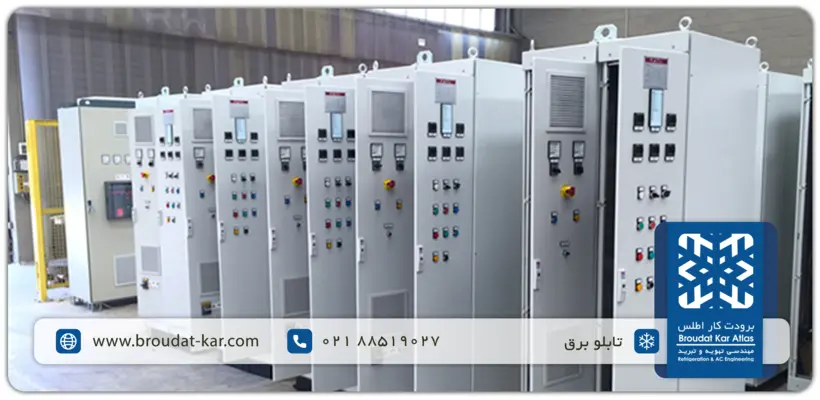
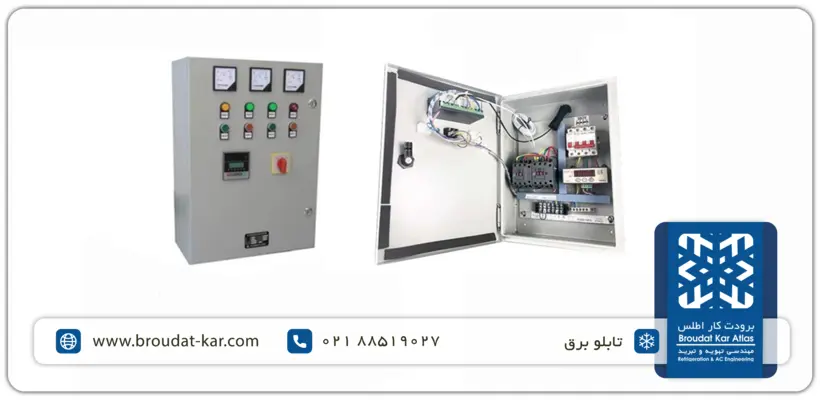
A cold storage electrical panel — also referred to as a refrigeration control panel or cold room control box — is an IP-rated industrial enclosure installed in the plant room or equipment area adjacent to the cold storage. The enclosure is fabricated from steel sheet with an electrostatic powder-coat finish and a minimum IP54 protection class, shielding sensitive internal components from dust, moisture, and occasional water splashing during cleaning cycles.
The panel centralizes power distribution paths, control equipment, and safety relays for the entire refrigeration circuit into a single point of management.
Internally, the panel is divided into two clearly separated sections:
- Power Circuit: Carries high-amperage current to compressor motors, evaporator and condenser fans, and defrost heating elements. Key components include the main circuit breaker, contactors, thermal overload relays, and motor protection switches.
- Control Circuit: The low-current decision-making layer — comprising digital thermostats, defrost timers, phase-monitoring relays, and pressure switch inputs — that issues on/off commands to the power-circuit devices.
⚠️ Technical Note: High currents in the power circuit cause micro-vibrations and thermal expansion/contraction in terminals. Over time, this loosens connections, creating electrical arcing and localized overheating. A bi-annual inspection with torque check plus thermographic imaging of power connections is the most important preventive maintenance action to prevent contactor burnout and panel fires.
Types of Cold Storage Electrical Panels
Panel design and structure are determined by compressor motor power, refrigerant type, plant-room architecture, and the required automation level. Understanding these differences prevents over-specification or the selection of an unsuitable panel for the refrigeration system.
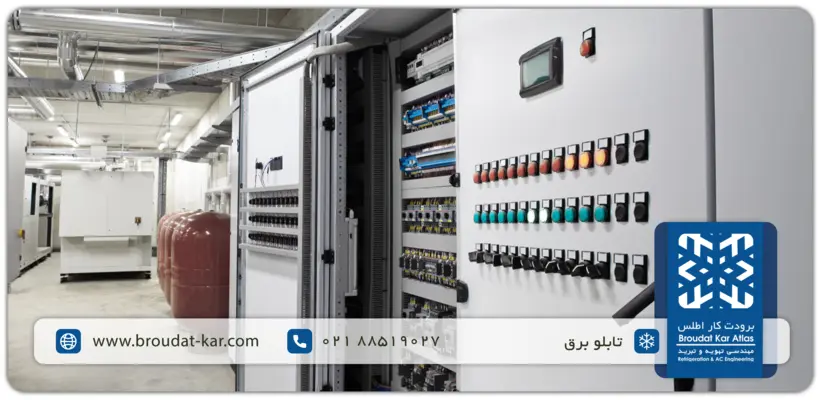
Single-Cell Panel (Commercial & Small Cold Rooms)
Commercial and small cold rooms typically use one dedicated wall-mounted or small floor-standing enclosure per condensing unit or per individual storage room. The power circuit is scaled to single-phase or three-phase compressor ratings from a few kW up to several tens of kW, and the control circuit is built around digital controllers and thermostats — commonly Danfoss or Carel. Key advantages: straightforward fault diagnosis, direct cable routing to the unit, and cost-effective construction.
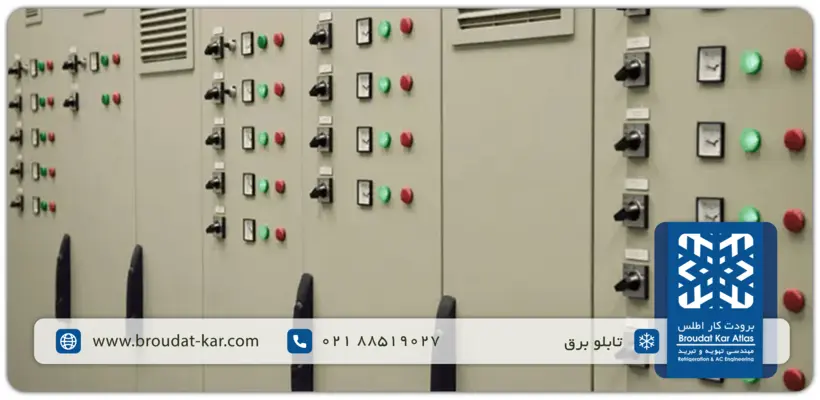
Multi-Cell Floor-Standing Panel (Industrial Plant Rooms)
Large industrial projects — whether Freon-based or ammonia refrigeration — use a central plant room with modular, floor-standing industrial enclosures (bolted or Rittal-frame) in a dedicated control room:
- Modular busbar distribution: Main incoming cell, power distribution cells with copper busbars, compressor and pump control cells, and evaporator-room control cells are fully segregated.
- Managed cable infrastructure: All power and control cables are routed via standard cable trays from the control room to halls and equipment.
PLC-Based Intelligent Panel (Automation)
Large complexes requiring capacity control across multiple compressors, runtime rotation management, real-time data logging for temperature and pressure, and remote monitoring use a PLC (e.g., Siemens S7-1200) with an HMI touchscreen. These panels communicate via industrial protocols such as Modbus or Profinet, enabling graphical display of the full refrigeration cycle, alarm history logging, and SMS alert dispatch on fault detection.
Above-Zero vs. Below-Zero Cold Rooms
Panel configuration for above-zero and below-zero storage rooms is driven by control circuit requirements (temperature setpoints and defrost intervals) and compressor motor power — not the operating temperature itself. Project scale and technical specification are the primary determinants of panel design and structure.
Key Components of a Cold Storage Electrical Panel — Selection Guide
Stable panel performance depends on the quality and correct selection of power and control circuit equipment:
- Circuit Breaker / MCB: Safe switching and short-circuit protection for the panel and downstream circuits.
- Contactor: Sized to motor rated current (AC-3 duty class) for compressor, fan, and element switching.
- Thermal Overload Relay / Motor Protection Switch: Set to motor nameplate current to prevent motor burnout from sustained overload.
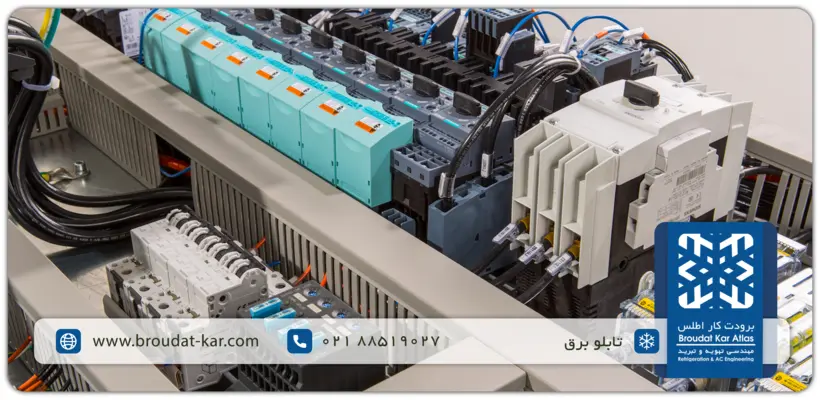
- Digital Thermostat / Controller: Precise temperature sensing and compressor or defrost command issuance.
- Phase Monitoring Relay: Protection against phase loss, phase imbalance, and voltage fluctuations.
- Pressure Switches (HP/LP): Connected to the control circuit for emergency shutdown on abnormal high- or low-pressure conditions.
Panel Structure Selection Guide
| PLC / HMI Required | Defrost Control Logic | Thermostat / Controller Type | Application Type |
| No | Timer-based / thermostat-driven | Simple or advanced digital | Commercial / Single-Room Cold Store |
| Optional | Timer-based / thermostat-driven | Central controller / digital | Commercial / Single-Room Cold Store |
| Mandatory | Automatic / operator-managed | Automation-capable digital | Large Industrial Complex |
Trusted Component Brands for Refrigeration Control Panels
The choice of electrical component manufacturer directly affects refrigeration cycle stability and unplanned downtime frequency:
- Danfoss (Denmark): Thermostats, EKC/ERC series controllers, and KP/RT pressure switches — the primary standard in the refrigeration industry.
- Schneider Electric (France): Contactors, circuit breakers, and thermal relays with high durability for power circuits.
- Siemens (Germany): Leader in automation systems, S7-series PLCs, and advanced control equipment.
- LS Industrial Systems (South Korea): Cost-effective power and switching equipment with acceptable quality for commercial panels.
Factors Affecting Cold Storage Electrical Panel Cost
Final panel cost is determined by the technical and engineering requirements of each project:
- Compressor motor power and power circuit sizing: Higher motor amperage demands larger breakers, contactors, and heavier busbars.
- Number of cells and enclosure type: Number of cells, steel sheet grade, paint quality, and IP protection rating (IP54–IP65).
- Component brand specification: Proportion of European vs. South Korean branded components in power and control circuits.
- Control architecture: Digital thermostats vs. full PLC and HMI touchscreen-based automation architecture.
- Ancillary features: Remote monitoring systems, I/O expansion cards, and SMS alert modules.
Installation & Commissioning Best Practices
Correct installation is as critical as correct specification. Key requirements for a reliable cold storage electrical panel installation:
- Location: Mount in a dry, well-ventilated plant room away from direct water exposure.
- Termination torque: All power cable terminations must be torqued to manufacturer specifications and verified with a calibrated torque wrench.
- Phase sequence check: Verify phase sequence before energizing three-phase compressor motors — reverse phasing causes compressor damage.
- Protection relay calibration: Set thermal overload relays and motor protection switches to the motor’s nameplate full-load amperage before first start.
- Thermographic baseline: Conduct thermographic (infrared) imaging of all power connections during the first load test to identify hotspots.
Why Broudat Kar Atlas?
With more than 30 years of experience in designing and executing refrigeration projects across a wide range of scales, Broudat Kar Atlas treats the electrical panel not as an off-the-shelf commodity but as an integrated component of the complete refrigeration circuit.
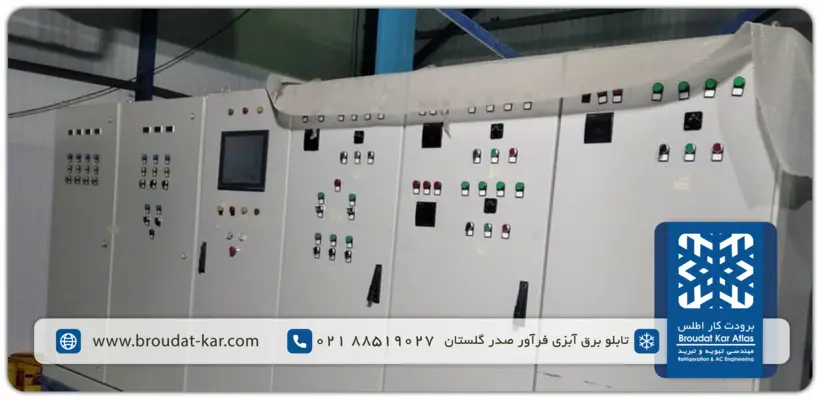
Our engineers calibrate the power circuit precisely to the compressor motor power, pumps, fans, and all other loads — and implement the control logic to current international standards tailored to your project requirements.
Exclusive use of genuine European and South Korean components, delivery of full EPLAN electrical drawings, and dedicated technical support are the guarantee of flawless operation and long-term system stability.
📞 Free Engineering Consultation: +9821 88303600